Project
Step City is a mobile application designed to transform everyday physical activity into an engaging urban adventure. By combining real-world exploration with virtual city-building mechanics, the app encourages users to discover their surroundings while staying active. The concept evolved through multiple iterations based on user feedback and research, ultimately creating a solution that seamlessly integrates exercise into users' daily routines while providing clear progression and social interaction opportunities.
Our team's journey began with a simple observation about urban life in San Francisco - hills are universally considered a miserable part of daily commutes. This sparked our initial question:
How might we make commuting on hills less like a chore and more like an adventure?
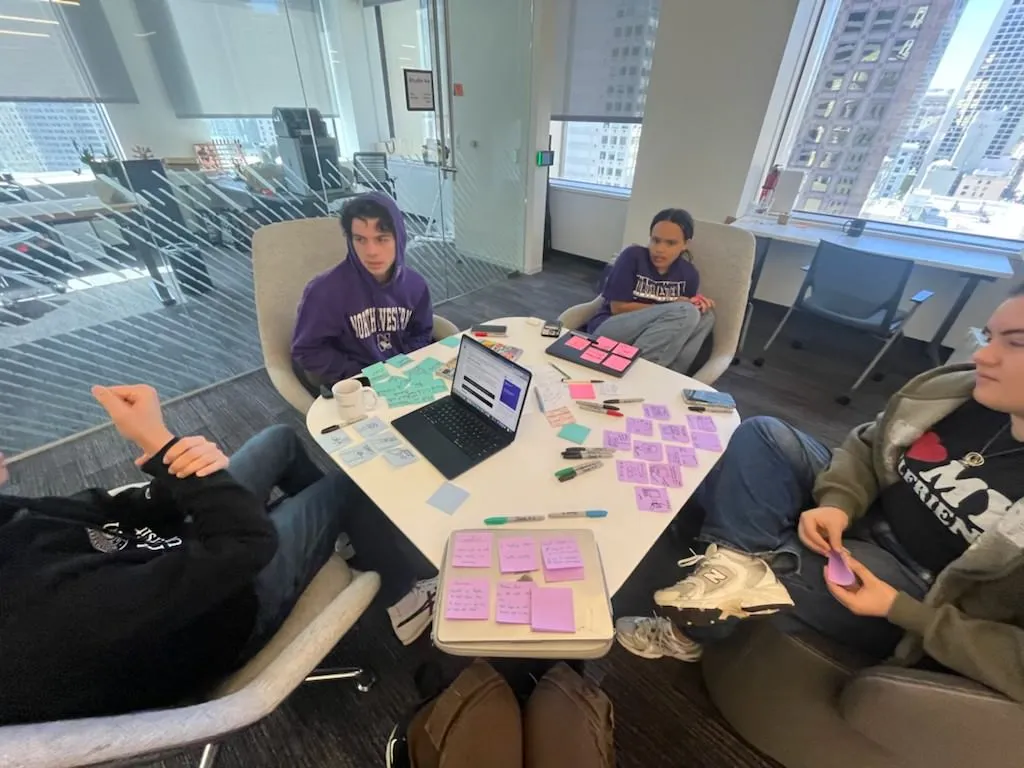
This led to our first concept, Hill Kill, a mobile game where users would climb real-world hills to defeat virtual hill-themed monsters. With excitement, we presented this early concept to potential users for feedback.
The response was sobering. Users didn't connect with our hill-slaying concept:
This critical feedback forced us to reassess our approach and return to square one.
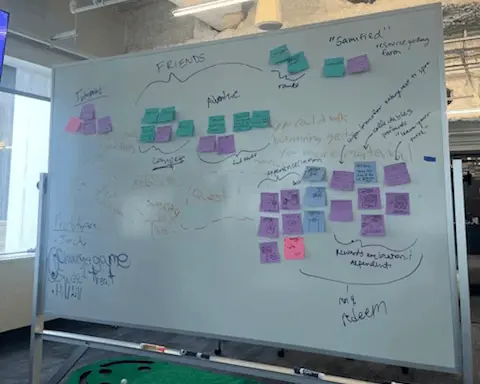
Rather than focusing narrowly on hills, we expanded our research to explore broader health and fitness motivations. Our interviews revealed three key insights:
From these insights, we came up with the persona Fitness Phil - a young person who recently moved into a new city seeking both physical activity and urban exploration.
With deeper insight, we reformulated our guiding question:

How might we transform physical activity for young people from a time burden into a seamless, delightful experience with clear progression milestones?
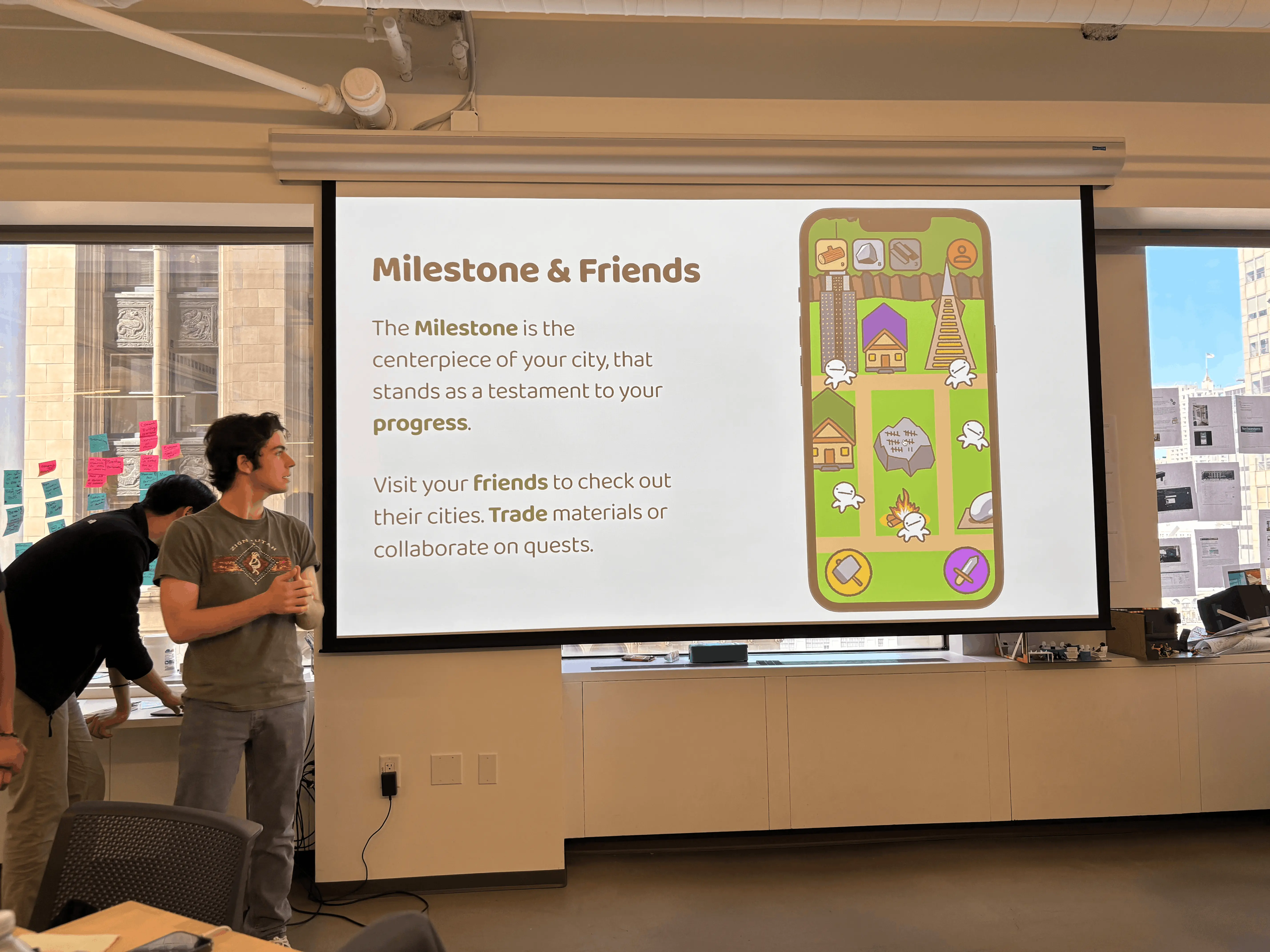
Our answer was Step City - a mobile game where players build an imaginary city by physically exploring and exercising in their real-world environment. The tagline captures this perfectly:
"Grow your city step by step, by stepping out into your city."
Key Features:
Visit real-world locations to unlock virtual blueprints of landmarks; Step stations are physically placed throughout the user's city.
Complete physical challenges to earn building materials, with more difficult quests yielding greater rewards.
Use collected materials and blueprints to construct a personalized virtual city.
Central monument that visually represents the user's ongoing achievements.
Visit friends' cities, trade materials, and collaborate on quests together.
We presented our work to faculty from Northwestern's Segal Design Institute, professional designers from Atlassian and New Computer, a startup founded by a former Apple designer, and fellow Northwestern students.
This project highlighted an essential design lesson: initial ideas may not resonate with potential users, necessitating a pivot and a return to the drawing board. By adopting a more thorough, research-driven approach, our team developed a much stronger final product that effectively addressed user needs, making physical activity both purposeful and enjoyable.